Cold sores have a way of showing up uninvited—like that one cousin who never texts first but always crashes your weekend plans. They’re painful, frustrating, and frequently appear at the worst possible times.
But the good news? You don’t have to just wait it out. You can treat them fast and even stop future outbreaks if you have the correct information and take prompt care of them.
At Total Point Urgent Care, we get how disruptive cold sores can be—and we’re here to help you heal faster and feel better, without the guesswork.
What is a Cold Sore?
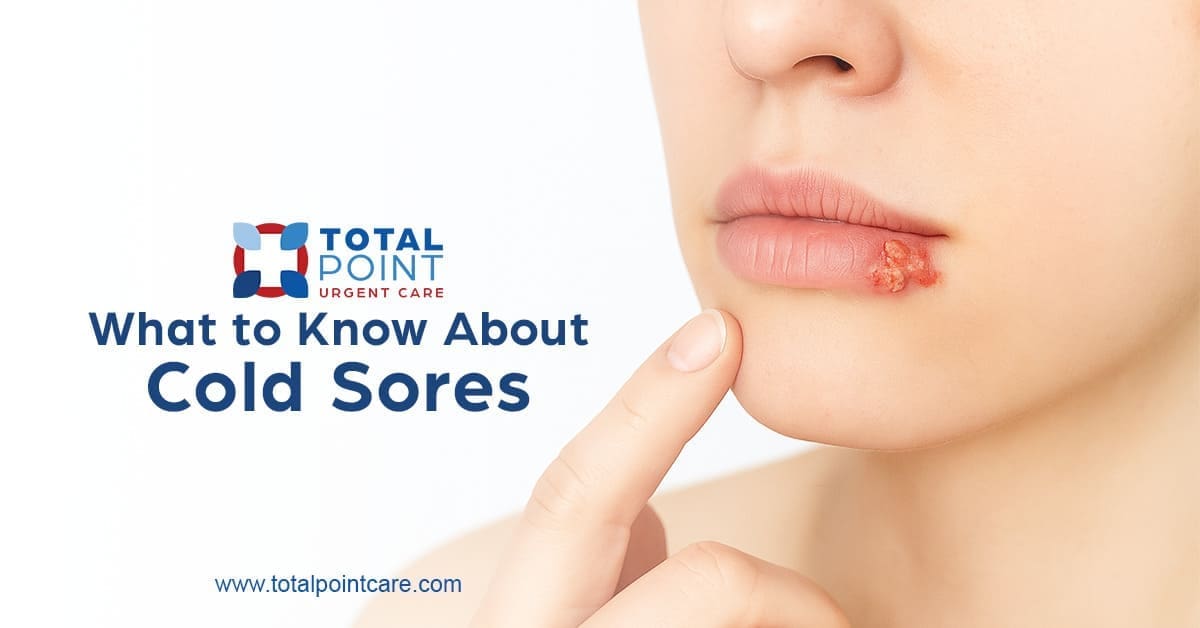
Cold sores, sometimes called fever blisters, are small, fluid-filled blisters that typically appear on or around the lips.
They’re caused by the herpes simplex virus—usually HSV-1, though HSV-2 (which is more often linked to genital herpes) can occasionally be the culprit too.
Here’s the kicker: once you are infected with HSV, it remains in your body in a dormant stage. It doesn’t leave—it just hides out in your nerves until something triggers it.
And it’s incredibly common. According to the CDC, nearly half of Americans aged 14–49 carry HSV-1. So if you’re dealing with cold sores, you’re not alone.
The Cold Sore Stages: What to Expect
A cold sore doesn’t just show up fully formed. It goes through stages:
- The Warning Signs (Day 1)
You may feel tingling, burning, or itching around your lips before anything’s visible. This is your best time for starting treatment. - Blisters Appear (Days 1–2)
Little fluid-filled bumps form, usually near the mouth, which appear over the next 48 hrs of development of warning signs - The “Weeping” Stage (Days 2–3)
The blisters break open and leak fluid. It’s not pretty, and it’s the most contagious phase. - Scabbing Over (Days 3–4)
The sore dries out and forms a crusty scab. It might crack or bleed, but it’s your body doing the hard work of healing. - Final Healing (Up to Day 14)
The scab falls off, usually without a scar. You might notice some lingering redness, but your skin will return to normal soon.
What Triggers Cold Sores?

Cold sores love a good comeback. The virus can be awakened from its dormant stage by specific triggers:
- Colds and the flu are examples of illnesses that can cause fever blisters.
- Emotional or physical stress
- Extended exposure to the sun or sunburn
- Changes in hormones (menstruation or pregnancy)
- Fatigue or lack of sleep
- Dental procedures or facial injuries
- Surgeries
Can You Spread Cold Sores?
Yes—and quite easily. Cold sores are contagious from the moment you feel that tingling sensation until the sore has completely healed. HSV-1 can spread in the following ways:
- Kissing someone who has a cold sore
- Sharing drinks, utensils, lip balm, or towels
- HSV keratitis is a severe condition that can develop from touching a sore and then touching your eyes.
Home Remedies for Cold Sores

- Use ice or cold, moist compresses to relieve pain.
- Painkillers are available over the counter, such as ibuprofen or acetaminophen.
- Creams should be dabbed gently rather than rubbed.
- A bacterial infection or scarring may result from licking, prodding, or picking at the sore.
- Using balms to keep lips hydrated.
- Drink plenty of fluids to avoid dehydration.
Additionally, you are always welcome at Total Point Urgent Care if you experience discomfort or if the sore doesn’t go away. We are available to assist with walk-in care and professional guidance.
When You Should See a Doctor
A cold sore can occasionally be more than just an annoyance. Consult a healthcare professional if:
- This is the first outbreak you have ever experienced.
- You’re unsure if it’s a cold sore.
- After ten days, it is still not healing.
- More than five times a year, you get cold sores.
- Other symptoms include mouth sores, enlarged glands, and fever.
- You’re living with a chronic condition (like HIV, eczema, or undergoing chemo)
- The sore appears near or spreads to your eye (this is serious—don’t wait!)
Parents, take note: contact your pediatrician right away if your child, especially one under eight weeks old, gets a cold sore or is exposed to one. Neonatal herpes requires immediate medical attention because it can be dangerous.
Smart Ways to Prevent Cold Sores
- Know your triggers and avoid them when possible.
- Strengthen your immune system with rest, nutrition, and hydration.
- Use sunscreen or SPF lip balm, especially if sunlight is a known trigger.
- Skip sharing personal items (yes, even with people you love)
- Ask your doctor about daily antiviral meds if you get frequent breakouts.
Cold Sore vs. Canker Sore — Not the Same!
| Cold Sores | Canker Sores | |
| Cause | Herpes simplex virus (HSV-1 or HSV-2) | Irritation, injury, or unknown causes |
| Contagious? | Yes | No |
| Location | Outside the mouth, the lips | Inside the mouth — cheeks, tongue, gums |
| Appearance | Fluid-filled blisters, scabs over | Flat ulcer with a white or yellow center |
FAQs
Q: What’s the fastest way to get rid of a cold sore?
A: Use antiviral cream at the development of first tingling sensation, and to a provider about prescription meds.
Q: How long do cold sores last
A: Usually 7–14 days, depending on treatment and individual immune response.
Q: Can you spread a cold sore if there’s no blister?
A: Yes—it’s possible to spread HSV-1 even when you don’t have visible symptoms.
Q: Are cold sores dangerous?
A: Usually not, but in newborns or when the virus spreads to the eye, it can cause serious complications.
Q: Can cold sores be prevented?
A: You can reduce outbreaks by avoiding triggers and using antiviral treatments as needed.
Final Word from Total Point
Cold sores may be a fact of life for many people, but you don’t have to suffer through them. With a little knowledge, some proactive care, and the right support, you can keep outbreaks under control and bounce back quickly.
For non-emergency conditions like allergies, colds, or sinus infections, visit Total Point Urgent Care. We offer walk-in treatment for non-emergency conditions like allergies, colds, sinus infections, and even asthma, and no appointment is needed.
We offer wellness membership plans. If you’re still feeling unwell, you can simply visit a location near you today, or you can connect with us through our telehealth services.
We provide quick, reliable, and affordable treatment at our urgent care locations across Texas.
- Abilene West, TX
- Abilene East, TX
- Athens
- Corsicana
- Daingerfield
- Ennis
- Hallsville
- Lindale
- Mansfield
- Allen
- Whitehouse
- Jacksonville
- Wheatland (Dallas)
as well as in Missouri,

Related Articles