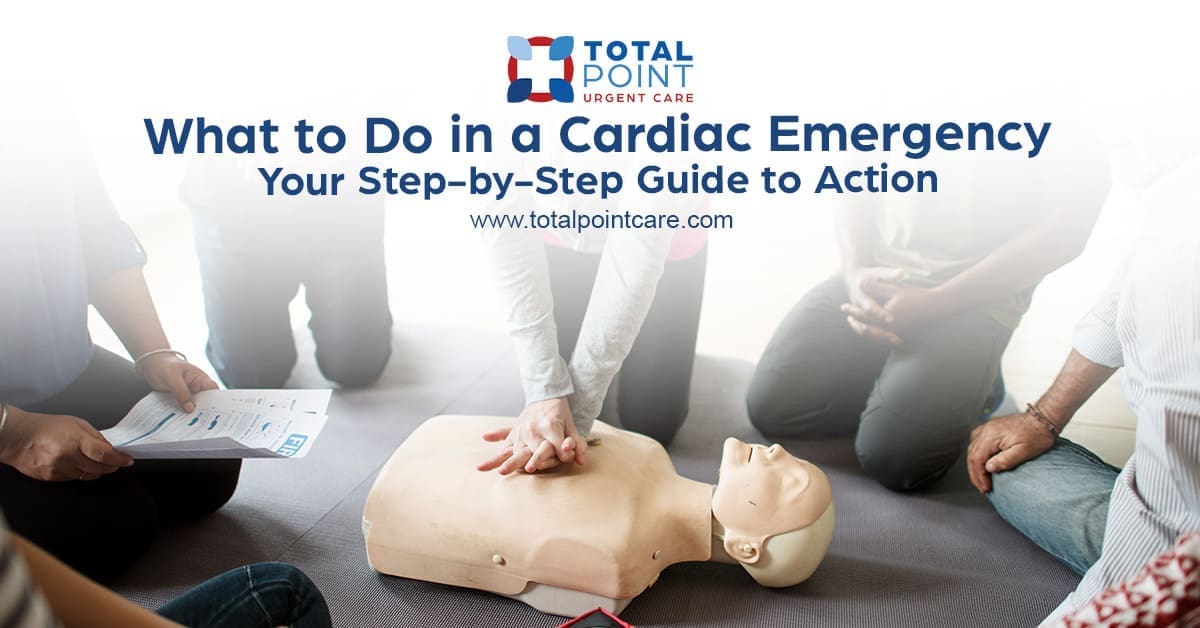
An emergency in the heart may occur suddenly, and when it happens, every second is critical. Whether it’s a heart attack or sudden cardiac arrest, knowing what to do in the first few minutes can be life-saving. This guide provides clear instructions to help you respond quickly and effectively during a cardiac emergency.
Recognizing a Cardiac Emergency: Key Symptoms to Watch For
The best way to save a life is to know the signs of a cardiac emergency. The comparison of heart attack and cardiac arrest is very important since a different approach has to be taken in relation to each circumstance.
The Symptoms of a Heart Attack
A heart attack happens due to the obstruction of blood supply to a section of the heart muscle. It is noteworthy that identifying the symptoms may be crucial. The signs of a heart attack are as follows:
- Chest discomfort: Pressure, tightness, or pain in the chest.
- Pain in other parts of the body: This can pass to the arm, jaw, or neck.
- Shortness of breath: Difficulty breathing or being winded.
- Nausea or lightheadedness: Feeling dizzy or faint, sometimes accompanied by cold sweat.
The CDC claims that the leading cause of mortality in the United States is heart disease, and a heart attack is one of the most frequent types of heart-related emergencies.
Signs of Sudden Cardiac Arrest
When the heart stops beating, this is said to be Sudden Cardiac Arrest (SCA). In contrast to a heart attack, cardiac arrest is an electrical problem with the heart that results in loss of pulse. Symptoms of SCA are:
- Sudden collapse: The individual collapses and becomes unconscious.
- No pulse: No pulse can be felt, and no breathing can be heard.
According to the statistics of NIH, there are more than 350,000 cardiac arrests that happen outside of hospitals every year in the U.S. Taking someone to the hospital without quick treatment may not help because every minute without care lowers their chance of survival.
Immediate Steps to Take in a Cardiac Emergency
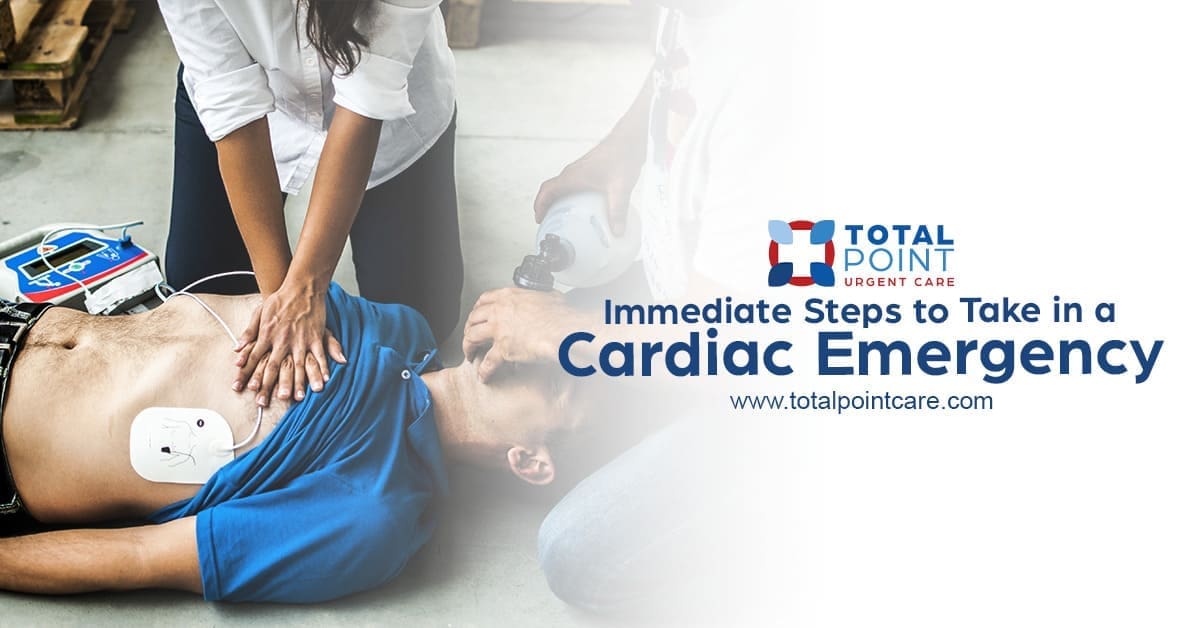
A cardiac emergency can quickly become a life-threatening situation that requires urgent action. So to give the person the best possible chance of survival, please follow these steps carefully:
Step 1: Stay Calm and Assess the Situation
The initial step in any cardiac crisis is to stay calm. Staying calm will enable you to make definite choices and take initiative. The following is to be done:
- Check for signs of life: The next step is to check whether the patient is breathing and reacting where the situation is critical so that the urgent measures can be taken.
- Ensure the environment is safe: Be aware of the surroundings and make sure that it is safe with regards to traffic or harmful objects.
- Seek medical assistance: In case you are near an urgent care facility, it is right to visit urgent care to receive quick assistance. Urgent care facilities have the ability to care for emergency cases and can stabilize the individual until more advanced assistance can arrive.
- Gather necessary medical information: In case the victim is still conscious, you can inquire whether they have a history of heart disease or are aware of an unknown heart disease.
Step 2: Start CPR (If Needed)
In case the individual is not breathing and is in an unconscious condition, immediately perform CPR. CPR is used to facilitate blood flow to essential body organs until the arrival of professional help. In order to carry out CPR:
- Place your hands on the center of the chest: One on top of the other, and your elbows should be locked and your arms straight.
- Press hard and fast: Press down at a minimum 2 inches depth and at the frequency of 100-120 compressions per minute.
- Proceed with CPR until paramedics come, or an AED (Automated External Defibrillator) can be used.
The American Heart Association has reported that early CPR may increase the survival rates after sudden cardiac arrest.
Step 3: Use an AED (If Available)
In case there is an Automated External Defibrillator (AED) nearby, then use it immediately. AED has the capacity to restart the heart to its normal beat. Steps to applying an AED are as follows:
- Turn on the device and follow the instructions.
- Insert the pads on the bare chest of the person.
- Allow the AED to examine the rhythm and provide a shock where necessary.
Survival up to 70% is possible if an AED is given within the initial minutes of cardiac arrest (American Heart Association).
Understanding the Role of Medical Help in Cardiac Emergencies
Although some measures, such as CPR and application of an AED, should be initiated immediately, the patient needs professional medical treatment to remain in the treatment process.
Emergency Medical Response
The emergency responders will treat the patient in the form of providing advanced life support (ALS). This may involve defibrillation, medication, or advanced airway management.
Post-Emergency Care and Recovery
Common components of post-cardiac emergency care are:
- Hospital treatments: It includes angioplasty or thrombolytic medications.
- Rehabilitation: It is aimed at assisting people to recover and become strong after a heart attack or cardiac arrest.
- Lifestyle changes: Lifestyle modification involving changes in diet, physical exercise, and medication can be implemented during continuous care to avoid further cardiac-related catastrophe.
According to the NHLBI, achieving recovery and implementing long-term treatment after a cardiac emergency are essential to prevent further complications.
Tips for Preventing Cardiac Emergencies: Heart Health Starts Now
While some cardiac emergencies may be unavoidable, adopting a heart-healthy lifestyle can significantly reduce the risk of experiencing one.
Maintain a Healthy Diet and Exercise Routine
Maintaining a healthy diet and engaging in exercise are important for the heart. Eat as many fruits, vegetables, whole grains, and as little meat as possible. Exercise for at least 30 minutes/day for at least 5 days per week.
Get Regular Health Check-ups
Early detection of heart disease, high blood pressure, or excessive cholesterol—all of which can result in heart attacks or cardiac arrest—can be done by routine checkups. The secret to prevention is early intervention.
Call to Action: Protect Your Heart Health
Cardiac emergencies can happen without warning, but knowing what to do in the critical moments can save a life. Learning CPR, using an AED, and seeking immediate medical care can significantly increase survival chances.
For ongoing heart health support, consider visiting Total Point Urgent Care. Our team is here to help with urgent care, preventive services, and cardiac health consultations.
With locations across Texas and Missouri, we provide immediate, walk-in care for a wide range of medical needs, from minor injuries to more urgent conditions.
Need help now? Call us at 903-448-7611 or visit our website to find the nearest Total Point Urgent Care location.
Our telehealth services offer quick and convenient access to healthcare professionals from the comfort of your own home. No matter the situation, we’re always just a phone call or click away.
Emergencies don’t follow a schedule, but your health care can. Our Wellness Membership Plan ensures that you’re covered without the stress of unexpected medical bills. Focus on staying healthy, let us handle the rest.
For immediate care, urgent advice, or to learn more about how we can help, call us at 903-448-7611 or visit totalpointcare.com/locations
Follow us on Facebook and Instagram for important health tips, emergency preparedness advice, and daily reminders to stay ready for anything life throws your way.
FAQs
Q. What are the early signs of a heart attack?
The early signs of a heart attack include chest pain or discomfort, shortness of breath, nausea, and pain in the arm, neck, or back.
Q. Can CPR save someone having a heart attack?
Yes, CPR helps maintain blood flow to vital organs until professional help arrives.
Q. Is there any warning before a heart attack?
Often, there are warning signs like chest pain or shortness of breath that can appear hours or days before a heart attack occurs.
Q. How do I know if someone is in cardiac arrest?
Cardiac arrest is evident if the person suddenly collapses, stops breathing, and has no pulse.
Q. How long do I perform CPR before stopping?
Continue CPR until emergency help arrives, the person starts breathing, or an AED is available.

Related Articles