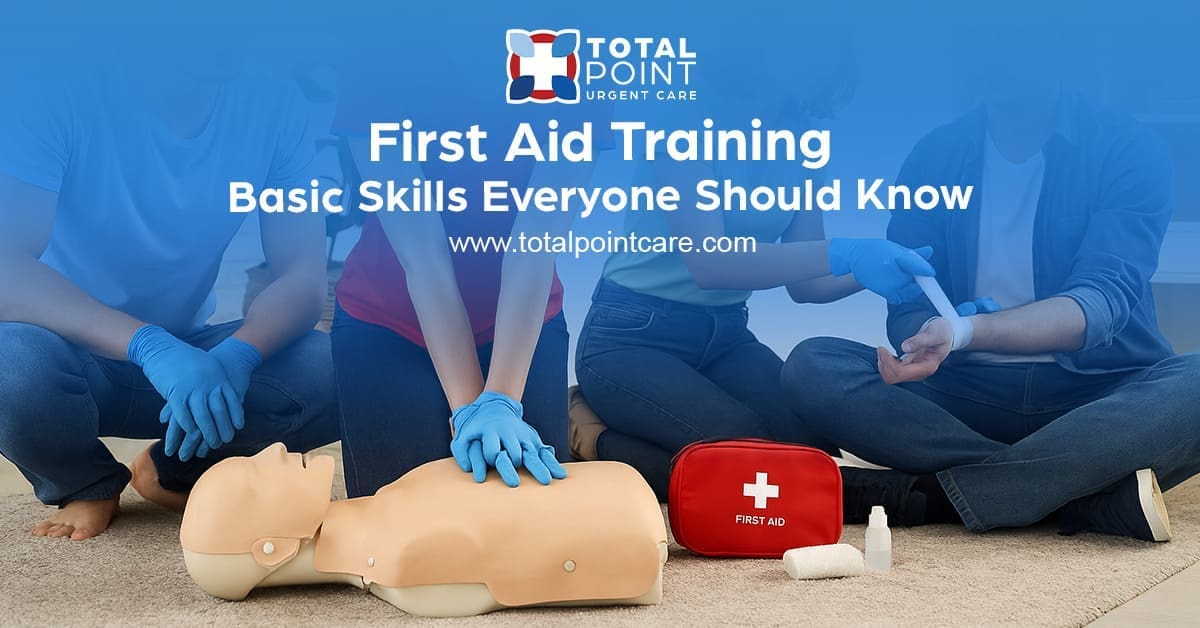
Better yet, imagine that you are out with your family, say at a park, or a ball game, or even at home, and the person starts choking hard or falls to the ground, or even falls unexpectedly. What would you carry out? Panic? Freeze? Or would you start, calm and prepared, simply knowing what to do? This is where first aid training excels.
It does not matter whether you are a paramedic or a lifeguard; first aid skills are essential for everyone to possess. Disasters never take a break, and neither should you. It is either a cut with bleeding, or a burn, or a person who has had a heart attack; the knowledge of what to do can save his life or not.
Now picture yourself walking through the Fundamentals of First Aid: First aid skills that everyone should know (and how learning them ranks among the smartest and the most empowering decisions you can ever make).
Why First Aid Training Is a Must
We are the ones who live in a hurry-up world, and accidents occur daily at places where we live (at homes), work (at workplaces), as well as at schools and in the streets. However, the majority of people are unable to cope with them. The fact is that during a real emergency, seconds matter.
When you learn first aid basics such as CPR, control of bleeding, and shock reaction, you not only become more self-confident but also become a vital part of the survival chain. Trained bystanders save lives, and bystanders are usually the first to arrive.
Courses like those offered by the Red Cross go far beyond textbook theory. They provide hands-on training, realistic simulations, and confidence-building scenarios that prepare you for real-life emergencies. Whether it’s learning to use an AED correctly, managing burns, responding to choking incidents, or recognizing the signs of cardiac arrest or stroke, this kind of training empowers everyday people to become lifesavers.
What You’ll Learn in a Basic First Aid Class
The majority of the certified training in first aid tends to be direct, realistic, and practical. The thing is, these are what you can learn:
CPR & AED (Automated External Defibrillator)
- Hands-only CPR
- Rescue breathing
- How to recognize cardiac arrest
- Proper use of an AED
Choking Response
- Heimlich maneuver for adults and children
- Back blows and chest thrusts for infants
- Signs of airway obstruction
Bleeding Control
- Applying direct pressure
- Elevating injured limbs
- When and how to use a tourniquet
Wound Care
- Cutting, dressing, and washing
- Handling burns and blisters
- Avoiding infection
Shock and Emergency Response
- Early signs, such as clammy skin, rapid breathing, etc., should be taken into consideration.
- Maintaining the victim’s warmth and comfort
- Positioning while awaiting help
The Life-Saving Value of CPR and AED
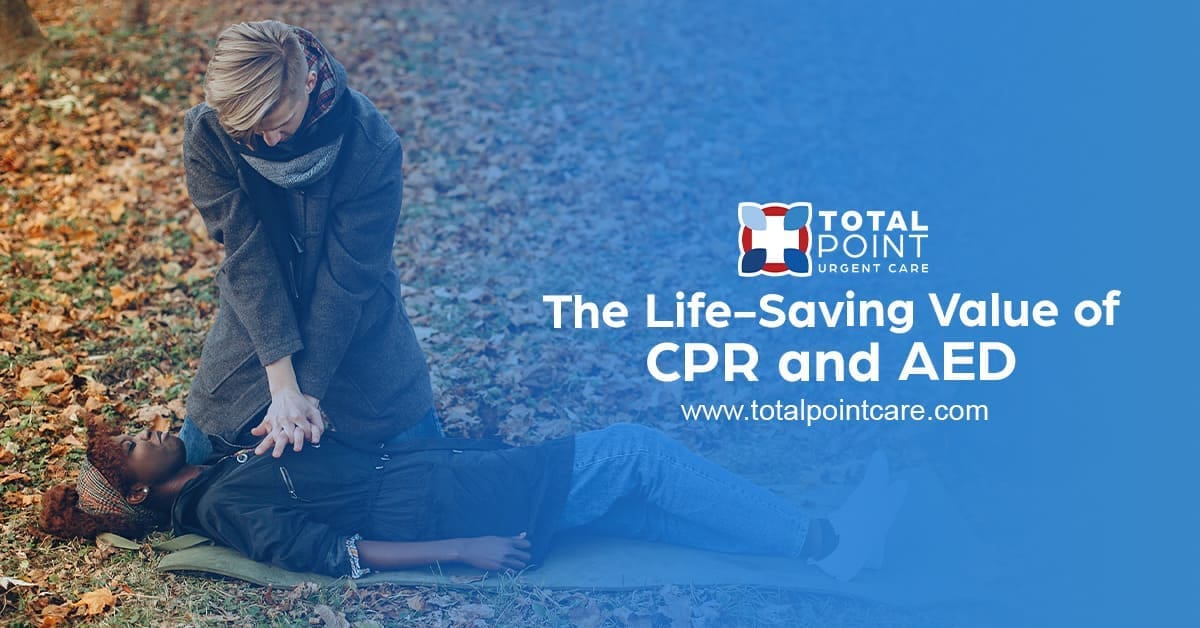
Even apparently healthy people may have a sudden cardiac death at any time or place. Under such circumstances, CPR skills and the use of AEDs can significantly affect survival rates.
When you are trained and confident, you can act immediately rather than waiting for someone to come help you out. That makes all the difference. In those critical first few minutes, your response can mean the difference between life and death.
Bleeding, Burns, and Broken Bones: What You Can Do
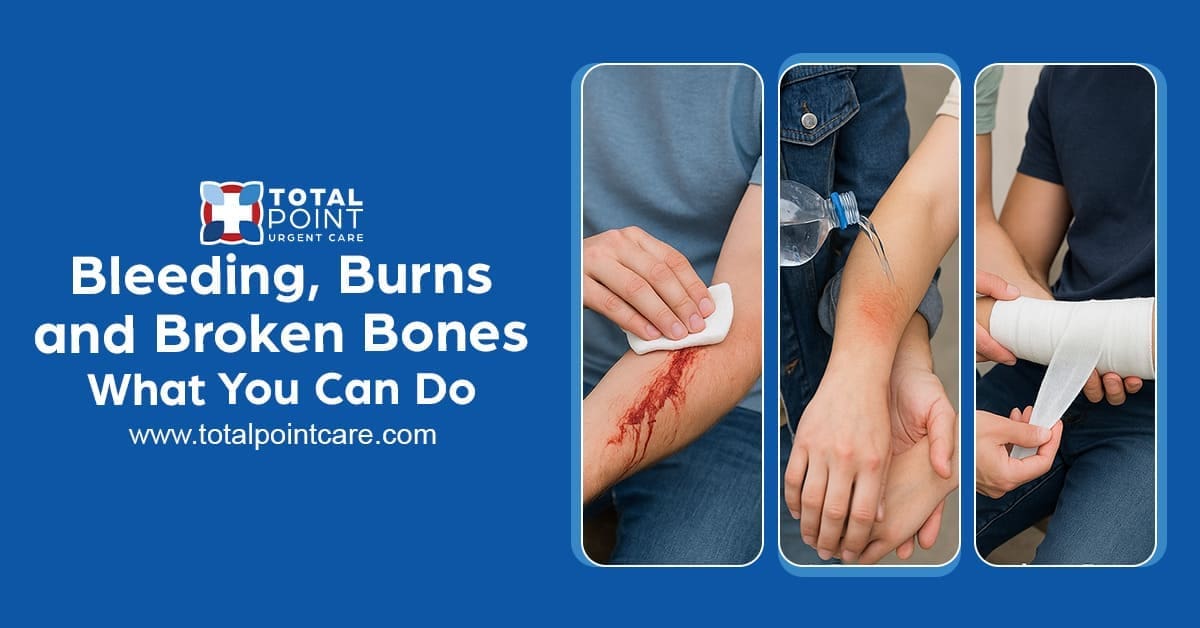
Traumatic injuries are usually common, whether it is a car accident, a fall, or an accident in the kitchen. Below are tools that first aid training provides to respond fast:
- Stop the bleeding using pressure or a tourniquet
- Clean and bandage wounds properly
- Immobilize a suspected fracture until help arrives
- Treat minor burns and avoid serious complications
Even minor injuries, if left untreated, can worsen. Your first aid training helps prevent that.
Ready to Learn? Here’s Your Next Step.
Don’t wait for a crisis to realize you’re unprepared. Take action now.
At Total Point Urgent Care, we offer affordable, certified first aid and CPR training for individuals, families, and businesses. Whether you’re renewing your certification or just starting, we’ve got options that work with your schedule.
Now we are serving families across Texas and Missouri with convenient, reliable urgent care you can trust.
Explore all of our Total Point locations: totalpointcare.com/locations
Our Wellness Membership Plan makes caring for your health simple and budget-friendly, so you can focus on what matters without stressing over unexpected care costs.
Have questions? Call us at 903-448-7611
Visit our website for expert advice, urgent care info, and wellness tips straight from trusted providers.
Follow us on Facebook and Instagram for daily health hacks, seasonal safety tips, and behind-the-scenes care that puts you first.
FAQs
Q. How long does first aid training take?
A. Most courses are 2–6 hours, depending on whether they include CPR, AED, and advanced modules.
Q. Do I need previous experience to take a class?
A. No. First aid classes are designed for total beginners as well as those looking to refresh their skills.
Q. How long does certification last?
A. Typically 1–2 years. After that, you’ll need a refresher to stay current.
Q. Can kids and teens take first aid classes?
A. Yes! Many programs offer age-appropriate training for younger learners.
Q. Is first aid training only for medical professionals?
A. Not at all. It’s for everyone. Parents, teachers, babysitters, employees—anyone who wants to be prepared.

Related Articles