
You wake up feeling tired, with a headache, a stuffy nose, and a runny nose. Your body feels sore, you’re drained, and you’re wondering if you’re getting sick or if it’s just allergies acting up again.
If your seasonal allergies feel worse than usual, almost like the flu, you’re not imagining it. Allergy symptoms can sometimes feel like flu symptoms. Knowing how to tell them apart can save you time, energy, and help you avoid seeing the wrong doctor.
Let’s go over the similarities, the differences, and help you figure out what your body might be trying to tell you.
Yes—Allergies Can Sometimes Feel Like the Flu
Here’s the thing: your immune system has so many ways to react. Whether you’re exposed to pollen or a virus, your body kicks into defense mode. That’s where symptoms like fatigue, stuffiness, and sore throat come in.
With allergies, your immune system is responding to something that isn’t dangerous—like tree pollen or dust—but it thinks it is. That response releases histamines, which cause inflammation, mucus, and the dreaded sinus pressure that can leave you feeling wiped out.
Meanwhile, the flu (caused by influenza viruses) creates full-body inflammation. Your body fights back with fever, body aches, and chills in addition to the classic nasal congestion and cough.
Shared Symptoms Between Allergies and the Flu:
- Runny, stuffy nose
- Sore throat
- Dry cough
- Headache
- Tiredness or fatigue
Because these symptoms overlap, it’s easy to get them mixed up, especially during allergy-heavy seasons when flu viruses are still floating around.
Spot the Difference: Allergies vs Flu
So, how do you know which one you’re dealing with? Timing and symptom type are your best clues.
Here’s a quick comparison:
| Symptom | Allergies | Flu |
| Fever | Rare to none | Very common (over 100°F) and of high grade |
| Body aches | Occasionally (from fatigue) | Common and often severe |
| Sneezing | Very common | Not typical |
| Cough | Sometimes dry | Common, can be wet or dry |
| Itchy eyes/nose | Very common | Not typical |
| Fatigue | Moderate, can be ongoing | Sudden and intense |
| Duration | As long as the allergen persists | Usually 3 to 7 days |
| Onset | Gradual | Sudden |
If your symptoms develop suddenly, include a fever, and you feel severely fatigued, the flu is more likely. However, if you experience itchy eyes, sneezing, and the gradual onset of fatigue, seasonal allergies may be the cause.
Do Allergies Ever Cause a Fever?

Allergies alone don’t cause fever. However, they can lead to complications, such as sinus infections.
Sinus infections often start when allergies cause your nasal passages to swell and trap bacteria, leading to infection and a low-grade fever.
If you’re dealing with persistent nasal congestion paired with facial pain, pressure, or fever, it’s worth checking in with a provider. You may be dealing with more than just allergies.
When Should You See a Doctor or Visit Urgent Care?
Sometimes it’s not enough to play symptom detective at home. You deserve clarity, especially when your energy is drained, your sleep is disrupted, or you’re unsure if you might be contagious.
Consider stopping by urgent care if:
- You have a fever over 100.4°F
- Symptoms come on suddenly and intensely.
- You feel chills, muscle aches, or body-wide soreness.
- You’re having trouble breathing, or your chest feels tight.
- Your symptoms aren’t improving after 10 days.
- You want to rule out COVID-19, flu, or strep throat.
At Total Point Urgent Care, we offer same-day care, rapid testing, and personalized treatments that help you breathe easily—literally.
Why an Accurate Diagnosis Matters
Getting the right diagnosis is most important because different illnesses need different treatments to prevent complications.
You wouldn’t take allergy medicine for the flu, right? The flu is caused by a virus, which sometimes is treated with antiviral medication if caught early.
Other medications, such as antihistamines, can also help manage symptoms like a runny nose or sneezing associated with the flu.
Allergies, on the other hand, are treated with antihistamines, nasal sprays, and by avoiding what triggers your symptoms.
Taking the wrong medicine won’t help and can even cause problems. That’s why getting checked by a healthcare provider and knowing what’s causing your symptoms is the best way to feel better, faster.
How to Manage Allergy Symptoms That Feel Like the Flu
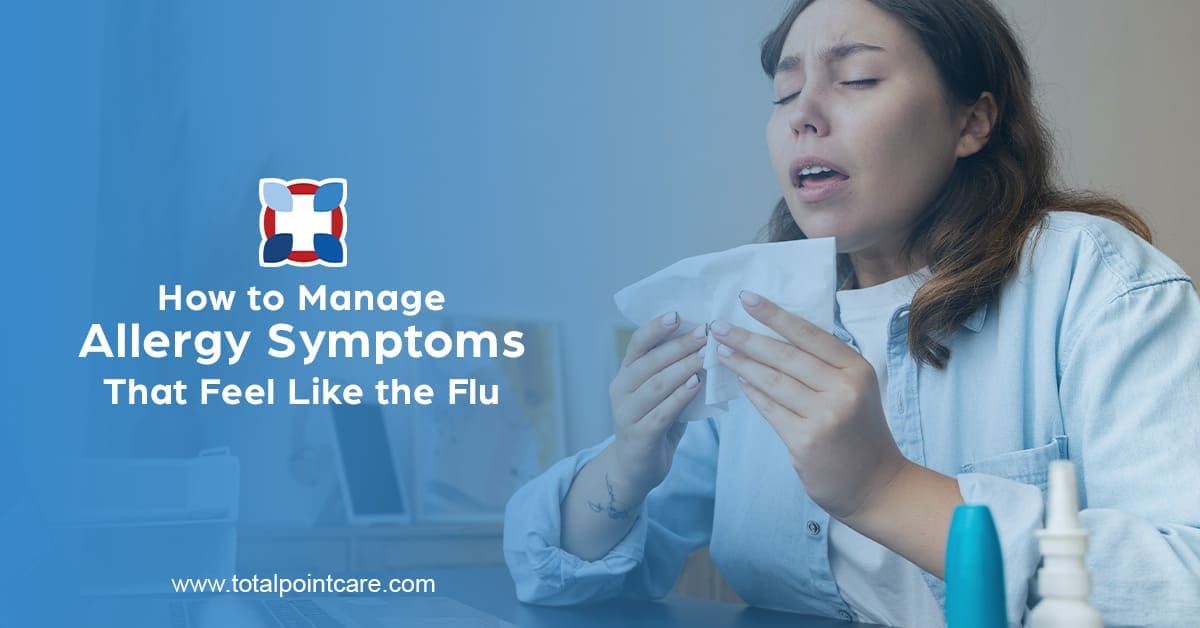
If you’re someone who battles allergies every spring, fall—or honestly, year-round—you know they can wear you down. When they flare up to the point that you feel flu-ish, it’s time to level up your allergy game.
At-Home Relief Options:
- Antihistamines (e.g., loratadine, cetirizine)
- Nasal steroid sprays (e.g., fluticasone)
- Saline nasal rinses to clear allergens from your sinuses.
- HEPA filters to reduce indoor allergen exposure
- Stay indoors when pollen counts are high.
Need a Long-Term Plan?
- Ask about allergy testing to identify the trigger.
- Consider allergy shots (immunotherapy) for chronic relief (American College of Allergy, Asthma & Immunology)
- Work with a provider on a year-round strategy that fits your lifestyle.
The goal? Get ahead of allergy season before it gets ahead of you.
The Bottom Line: Don’t Guess—Get Checked
It’s frustrating not knowing what’s making you feel awful, especially when allergy season and flu season overlap. But remember: feeling tired, foggy, and congested doesn’t automatically mean you have the flu.
If you’re dealing with persistent symptoms and still unsure what’s going on, let a healthcare provider help you sort it out. You don’t have to guess—and you shouldn’t have to tough it out alone.
Need Help Sorting It Out? We’re Here for You.
At Total Point Urgent Care, our team can help pinpoint exactly what’s behind your symptoms—whether it’s allergies, the flu, or something else entirely. We offer:
- Rapid flu, strep, and COVID-19 testing
- In-person and virtual visits
- Tailored care plans to help you breathe easier—and fast
We offer wellness membership plans. If you’re still feeling unwell, you can simply visit a location near you today, or you can connect with us through our telehealth services.
We provide quick, reliable, and affordable treatment at our urgent care locations across Texas.
- Abilene West, TX
- Abilene East, TX
- Athens
- Corsicana
- Daingerfield
- Ennis
- Hallsville
- Lindale
- Mansfield
- Allen
- Whitehouse
- Jacksonville
- Wheatland (Dallas)
as well as in Missouri,
Frequently Asked Questions
1. Can allergies make me feel like I have the flu?
Yes. Allergies can cause fatigue, headaches, congestion, and sore throat—symptoms that overlap with the flu, even though the causes are different.
2. Do allergies ever cause body aches or fever?
Not typically. Allergies don’t cause fever or widespread body aches. If you’re feeling sore or running a fever, something else—like a virus—might be at play.
3. How long do allergy symptoms last compared to the flu?
Allergies can stick around for weeks or months, depending on exposure. The flu usually lasts 3 to 7 days, though fatigue may linger a bit longer.
4. Can you have both allergies and the flu at the same time?
Absolutely. It’s not common, but it’s possible—especially during peak allergy season. A provider can help differentiate and treat both.
5. Should I go to urgent care for allergy symptoms?
Yes, if your symptoms are severe, worsening, or you’re not sure whether it’s allergies, a cold, or something more serious. We can provide quick relief and clarity.
Reference

Related Articles