How long has it been since you washed your hands properly?
Though it is a seemingly simple step, handwashing remains an excellent method of avoiding the transmission of microorganisms.
In places like your home, workplaces, or even on the streets, the importance of clean hands cannot be overstated, as it can be the first step for staying healthy.
Washed hands save lives by lowering the transfer of harmful diseases like flu, cold, and even diarrhoeal diseases.
According to the Centers for Disease Control and Prevention (CDC), proper handwashing can help prevent millions of infections each year by stopping the spread of germs that cause illness.
So, how can you make sure your hand hygiene is effective? Let’s break it down step by step.
The Science Behind Handwashing: Why Clean Hands Matter
Understanding the Power of Soap and Water
Although handwashing appears to be a simple practice, its effects are huge.
Daily cleaning of your hands by using soap and water helps to wash away and eliminate dirt, oil, and germs. When you use soap, it sticks to the dirt, oil, and germs on your hands.
As you scrub, the rubbing helps loosen everything, and then water washes it all away.
The germs are then flushed into the water when you run your hands under water when you wash your hands.
The CDC states that washing hands with soap and water may help prevent respiratory infections by 23% and gastrointestinal infections by 40%.
When to Wash Your Hands for Maximum Effectiveness
It is important to know when to wash your hands, besides knowing how to wash your hands. Washing your hands: Key times to wash: The CDC advises that at certain times of the day, we should wash our hands; these include:
- Wash your hands before, during, and after preparing food.
- Wash your hands before and after eating.
- Wash your hands before and after caring for someone at home who is sick with vomiting or diarrhea.
- Wash your hands before and after treating a cut or wound.
- Wash your hands after using the toilet.
- Wash your hands after changing diapers or cleaning up after a child who has used the toilet.
- Wash your hands after blowing your nose, coughing, or sneezing.
- Wash your hands after touching an animal, animal feed, or animal waste.
- Wash your hands after handling pet food or treats.
- Wash your hands after touching garbage.
Washing your hands during these times minimizes the risk of introducing germs into your body, guarding you against the disease.
A Step-by-Step Guide on How to Wash Your Hands Correctly
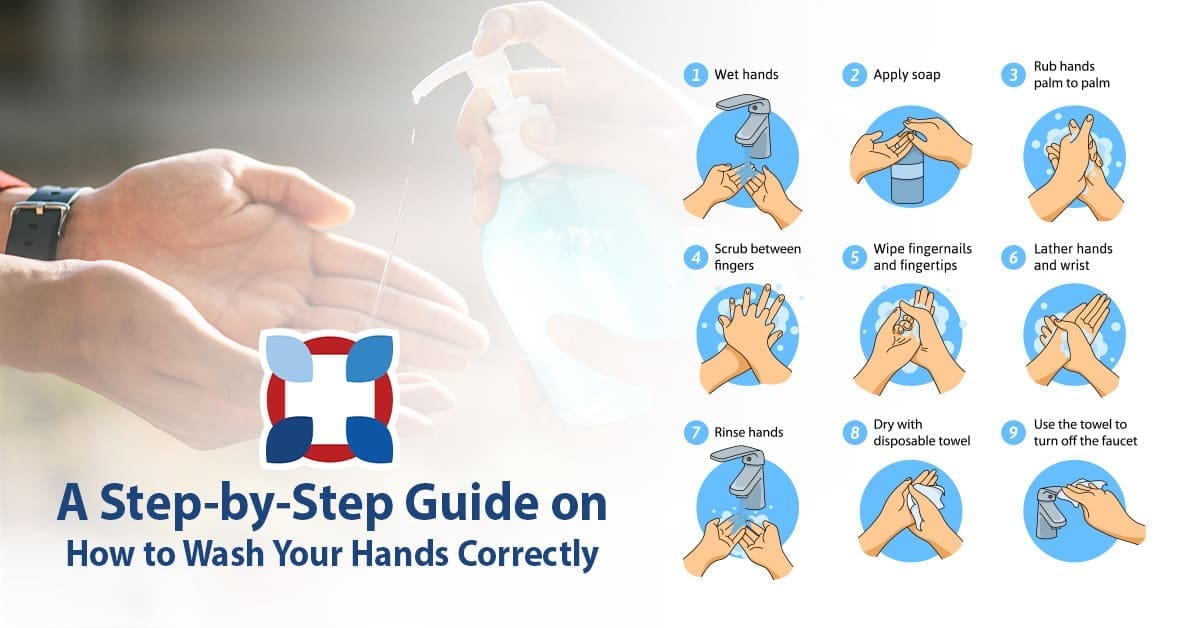
The 6 Steps of Proper Handwashing
Having known the importance of handwashing, it is time to learn how to properly wash your hands. The CDC recommends as follows:
Step 1: Wet Your Hands with Clean Water
Step 2: Use Soap
Use enough soap such that it spreads to all parts of the hands. Soap assists in the dissolving of oils and dirt, so one is able to flush the germs easily.
Step 3: Scrub for 20 Seconds
Scrub/Rub thoroughly all the parts of your hands, including the palms, backs of your hands, in between your fingers, and under the nails. Scrubbing should last for at least 20 seconds to be sure that all germs are washed off.
Step 4: Rinse with Clean Water
Wash your hands under clean, warm running water. Wash everything off using soap and water.
Step 5: Dry Your Hands
Use a clean towel or an air dryer to dry your hands. After washing, it’s critical to thoroughly dry your hands since they can readily absorb and transmit germs.
Step 6: Turn Off the Faucet With the Help of a Clean Towel
Your clean hands should not touch the faucet. Rather, turn it off with a clean towel to avoid re-contamination.
By doing these six easy actions, you may significantly lower the number of germs on your hands, improving personal hygiene and creating a healthier atmosphere.
Common Handwashing Mistakes to Avoid
Handwashing might sound very simple, but there are various errors that people commit, which make it less effective. There are some of the most common mistakes:
- Not washing for long enough: You need to scrub your hands for at least 20 seconds to ensure that germs have been removed from your skin.
- Rinsing with dirty water: Never wash your hands using contaminated water. It can take away all you have done by using a water source that is polluted.
- Skipping the back of your hands or nails: A vast majority of users have witnessed people paying attention to the palms and forgetting to care about the back of their hands, or less noticed(which is beneath our nails). They are locations in which germs lurk, and it is essential to clean them carefully.
Alternatives to Soap and Water: When to Use Hand Sanitizer
When Soap and Water Aren’t Available
On other occasions, there is simply no soap and water. Alcohol based hand sanitizer may be a good alternative in such an occasion, when you are on the move.
To be effective, hand sanitizers are expected to have a minimum percentage of alcohol (60 percent) since this strength can kill most germs.
It should be noted, though, that the hand sanitizer is not a good substitute for soap and water, particularly when your hands are visibly dirty. The good idea in such cases is to locate soap and water.
However, in most cases, you are in the streets or on the road, so a hand sanitizer can be a good way to cut the risk of infection.
Hand Hygiene in Different Settings
Handwashing at Home:
Good hand hygiene begins at home, and children must learn good handwashing skills at an early age. One way to ensure everyone at home stays healthy is by teaching kids to wash their hands, which helps keep illnesses at bay.
Hand Hygiene in the Workplace or Public Spaces:
It is important to wash hands regularly in group situations, like at the workplace or in schools, so as to avoid the spread of diseases.
Common places for germs to spread include shared kitchens, door handles, and desks. Provide your colleagues and classmates with the ability to wash their hands more frequently so that the whole place will be healthier.
Hand Hygiene During the COVID-19 Pandemic and Beyond:
More than ever before, hand hygiene has been emphasized during the COVID-19 pandemic.
Even when the risk of COVID-19 decreases, the practice of frequent hand washing should not be abandoned.
By making hand hygiene a part of our everyday routine, we can prevent further outbreaks as well as lessen common viruses such as colds and the flu.
The Benefits of Clean Hands Beyond Germs
Handwashing doesn’t just protect you from getting sick; it plays a much bigger role in overall public health.
Practicing good hand hygiene regularly can reduce missed days at work and school, boost productivity, and help build healthier, more resilient communities.
Clean hands aren’t just a defense against everyday illness; they’re a foundation for a stronger, healthier society. By preventing infections, handwashing also reduces the need for antibiotics, which in turn helps combat the growing threat of antibiotic resistance.
Keep Your Hands Clean, Stay Healthy
Having learned the significance of clean hands, ensure that you make a habit of cleaning your hands regularly.
If you’re feeling under the weather or you want more information on how to stay healthy, contact Total Point Urgent Care today or schedule an online consultation via telehealth.
Total Point Urgent Care is here to help you stay healthy and informed, with the best healthcare solutions available.
Our Wellness Membership Plan makes caring for your health simple and budget-friendly, so you can focus on what matters without stressing over unexpected care costs.
Have questions? Call us at 903-448-7611
Stay connected for practical health tips on Facebook and Instagram
Become a Wellness Member today, and let Total Point Urgent Care help you keep your family healthy and protected, season after season.
We are here For Your Next Step Forward
Whether you need a reminder on the best handwashing techniques or tips on maintaining proper hand hygiene, visit Total Point Urgent Care. We’re ready to help you keep your hands clean and your health on track.
We provide quick, reliable, and affordable asthma care at our urgent care locations across Texas.
- Abilene West, TX
- Abilene East, TX
- Athens
- Corsicana
- Daingerfield
- Ennis
- Hallsville
- Lindale
- Mansfield
- Allen
- Whitehouse
- Jacksonville
- Wheatland (Dallas)
as well as in Missouri,
We also offer a Wellness Membership Plan that’s smart, simple, and budget-friendly for the whole family.
FAQs
Q. How long should I wash my hands for?
A. Wash your hands for at least 20 seconds. This is the time needed to remove most germs from your hands.
Q. Can handwashing prevent the spread of COVID-19?
A. Yes, washing your hands regularly with soap and water is one of the best ways to prevent the spread of COVID-19 and other infectious diseases.
Q. Is hand sanitizer as effective as soap and water?
A. Hand sanitizer with at least 60% alcohol can be an effective alternative to soap and water, but it is less effective when hands are visibly dirty.
Q. What happens if I don’t wash my hands properly?
A. Failing to wash your hands properly can leave germs on your skin, increasing the risk of infections and illnesses, and disease transmission.
Q. How often should I wash my hands during the day?
A. Wash your hands whenever they are dirty, before eating, after using the bathroom, and after coughing or sneezing.

Related Articles