Sniffles, sneezes, a scratchy throat, and that foggy-headed feeling—we’ve all been there.
But the real question is: Do you have a cold or allergies? It’s one of the most common health questions during seasonal changes, especially in spring and fall when allergens spike and cold viruses circulate.
It might seem like a minor detail, but knowing the difference between symptoms of allergy and symptoms of cold is crucial for fast and effective relief. Treating allergies like a cold (or vice versa) can leave you with symptoms that persist for an extended period.
This guide breaks down how to distinguish between a cold and allergies, what each feels like, how long they last, and how to treat them effectively.
Why Does it Matter? Cold vs Allergy Symptoms
Let’s get one thing straight: a cold is caused by a virus, while allergies are triggered by your immune system overreacting to harmless substances like pollen, dust, or pet dander.
Treating the wrong condition can make things worse:
- Colds need rest and symptom relief—they’ll run their course in about a week.
- Allergies require avoiding triggers and using antihistamines to calm your body’s reaction.
According to the American Academy of Allergy Asthma & Immunology (AAAAI):
- Colds develop gradually over several days, while allergy symptoms begin shortly after exposure to a trigger.
- Colds usually last less than a week, but allergies can last as long as the allergen is present.
What is the Common Cold?
The common cold is a viral upper respiratory tract infection commonly caused by rhinovirus, including many other viruses. The average adult typically catches 2-3 colds per year, and kids even more.
Initial Appearance and Duration:
Colds usually last 7 to 10 days, are highly contagious, and are more common in colder months.
Key Symptoms of a Common Cold:
While colds share some symptoms with allergies, distinct clues help differentiate them. It starts gradually, and symptoms usually peak within 2-3 days of infection.
- Sneezing
- Runny or stuffy nose
- Sore throat
- Cough
- Fatigue and body aches
- Headache
- Mild fever
- Loss of appetite
How to Treat a Common Cold
Since there is no cure for the common cold, treatment focuses on supporting your body and making you more comfortable while the virus runs its course.
- Enough rest: Give your immune system time to fight it off
- Drink plenty of fluids.
- Use a clean humidifier.
- Try saline rinses or nasal sprays: Clears out mucus. For children, also use a rubber suction bulb.
- Gargle with warm, salty water ( children should not try this)
- Symptomatic management of fever with Tylenol or congestion with decongestants
What are Seasonal Allergies?
Seasonal allergies, also known as hay fever or allergic rhinitis, often appear in the spring and fall due to heightened allergens like pollen from trees, grass, weeds, or mold.
Indoor allergens like dust mites and pet dander can also cause issues year-round, especially when homes are sealed up in winter.
Initial Appearance and Duration:
Allergy symptoms tend to pop up suddenly when you encounter your specific trigger. If your “cold” lasts longer than 10 days, or comes back at the same time each year, chances are it’s allergies.
Key Symptoms of Allergies:
While some symptoms overlap with colds, allergies have very specific tell-tale signs.
- Sudden onset—symptoms start right after exposure to a trigger.
- Sneezing fits—multiple sneezes in a row.
- Itchy, watery eyes
- Clear nasal discharge
- Nasal congestion
- Itchy throat, ears, or nose
- No fever or body aches
- Symptoms lasting weeks or months if the allergen is still present
How to Treat Allergies
Allergy treatment focuses on managing your immune system’s overreaction to environmental triggers.
Avoid allergens:
This is the first line of defense.
- Limit outdoor time when pollen counts are high, often highest in the morning.
- Shower after being outside to wash off pollen.
- Keep windows closed, especially on windy days or when pollen counts are high, and use air conditioning with a good filter.
- Pay attention to whether symptoms are worse in specific rooms or around pets, especially dogs, and indicate indoor triggers.
Medication:
Often necessary and effective for managing daily symptoms.
- Antihistamines
- Decongestants
- Nasal spray steroids
Adrenaline auto-injectors, such as an EpiPen, for severe allergic reactions, along with wearing a medical allergy band to alert others in emergencies.
- These medications are most effective when taken regularly during allergy season, even proactively, but your specialist will give you an allergy management plan that will explain how to manage your allergy.
Allergy shots (immunotherapy):
A long-term strategy for when avoidance and oral medications are ineffective. Immunotherapy gradually exposes your body to increasing amounts of the allergen to build tolerance.
Cold vs. Allergies: Key Differentiators Summarized
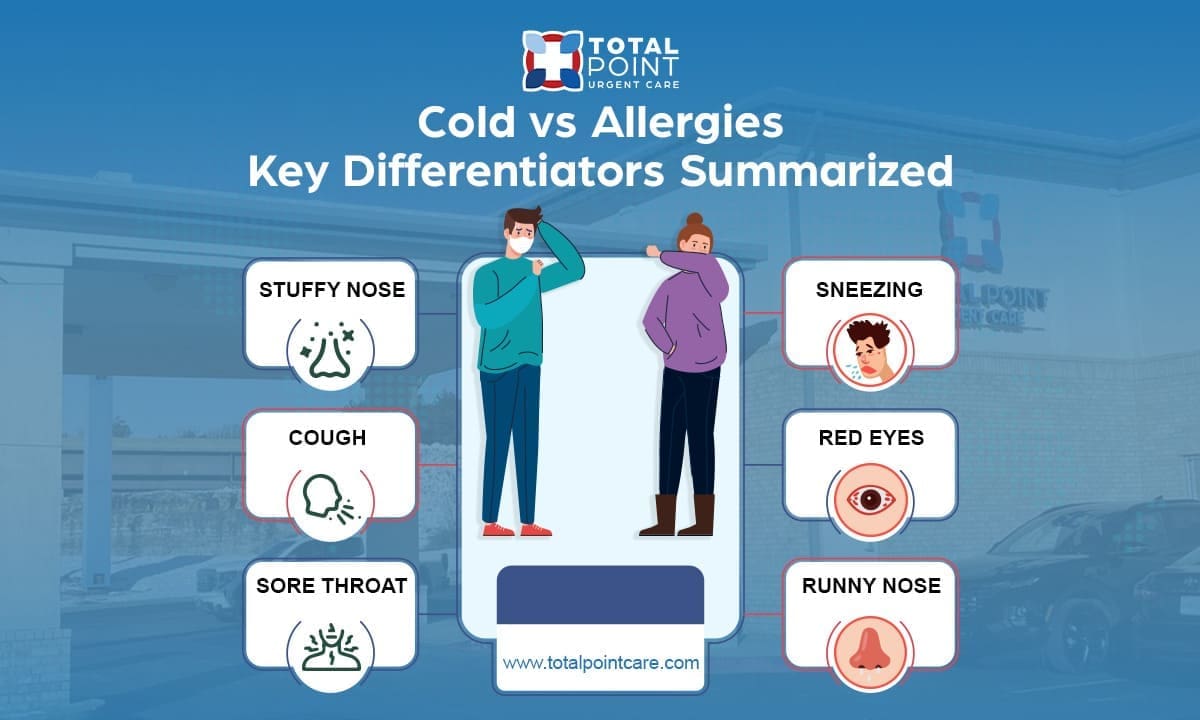
Here’s a quick overview of how to tell the difference:
| Symptom/Factor | Cold | Allergies |
| Cause | Viral infection | Immune reaction to harmless allergens |
| Onset | Gradual (1-3 days after exposure) | Sudden (immediately after exposure) |
| Duration | Less than a week | Weeks to months (as long as exposed to the trigger) |
| Contagious? | Yes | No |
| Fever? | Sometimes, low-grade | Never |
| Body Aches? | Often | No |
| Itchy Eyes/Nose? | Typically not intense | Classic, intense itchiness |
| Watery Eyes? | A bit, but not streaming | Truly watery, streaming |
| Mucus | Starts clear, and progresses to thick, yellow/green | Clear and watery, like a faucet |
| Sneezing | Yes, but it usually does not fit | Often “fits” (multiple in a row) |
| Sore Throat | The often prominent, sometimes the first symptom | Usually, a side effect (post-nasal drip), more irritating |
| Fatigue | “Sick” feeling, body fighting a virus | Often seasonal (spring/fall pollen), or tied to specific triggers |
| Timing | More common in colder months | Often seasonal (spring/fall pollen), or tied to specific triggers |
| Medication Test | Cold meds manage symptoms but don’t cure | Antihistamines offer significant, quick relief |
When to Seek Professional Help
It can be difficult to differentiate between a cold and allergies, and sometimes you can even have both at the same time.
If your symptoms are lingering, getting worse, or not responding to typical over-the-counter remedies, it’s wise to consult a healthcare provider.
You should seek medical attention if you experience:
- Unusual symptoms like loss of smell, chest pain, or shortness of breath could indicate something more serious, like a sinus infection or COVID-19.
- Wheezing or shortness of breath with your allergies can be a sign of developing asthma.
- Symptoms that persist beyond the typical cold timeline (more than 10 days) or worsen despite at-home care.
Get Expert Help at Total Point Urgent Care
For non-emergency conditions like allergies, colds, or sinus infections, visit Total Point Urgent Care. We offer walk-in treatment for non-emergency conditions like allergies, colds, sinus infections, and even asthma, and no appointment is needed.
We offer wellness membership plans. If you’re still feeling unwell, you can simply visit a location across Texas and Missouri today, or you can connect with us through our telehealth services.
Have questions? Call us at 903-448-7611
Stay connected for practical health tips on Facebook and Instagram
FAQs
1. How can I tell if it’s a cold or allergies?
Colds develop gradually and may include fever or body aches. Allergies start suddenly, cause itchy eyes, and don’t involve fever.
2. Do allergies cause a fever?
No. Fever is a sign of infection, not allergies.
3. Can allergies cause body aches?
No. Body aches are common with colds, not allergies.
4. How long do allergies last vs. a cold?
Colds last 7–10 days. Allergy symptoms can persist for weeks or months.
5. Can I have both a cold and allergies?
Yes. It’s possible to have both at the same time, especially during allergy season.
6. What’s the best way to treat allergies?
Use antihistamines and nasal sprays, and avoid allergens. For long-term relief, consider allergy shots.
7. When should I see a doctor?
If symptoms last over 10 days, include fever with allergies, or worsen over time, see a provider.
References
https://newsinhealth.nih.gov/2014/10/cold-flu-or-allergy
https://www.healthline.com/health/allergies-or-something-else#cold-vs-allergies

Related Articles